How to Access the New CPA Canada Learning EBooks

Update 2026: EBooks are now on the UWorld platform

CPA Canada’s Learning Library eBooks have transitioned from VitalSource to the UWorld adaptive learning platform as of April 1, 2025. If you’ve already accessed your eBooks through VitalSource (old way), you’ll still be able to view them there, but they won’t be updated going forward. If you have notes or highlights, export them in advance.

Steps to Access EBooks

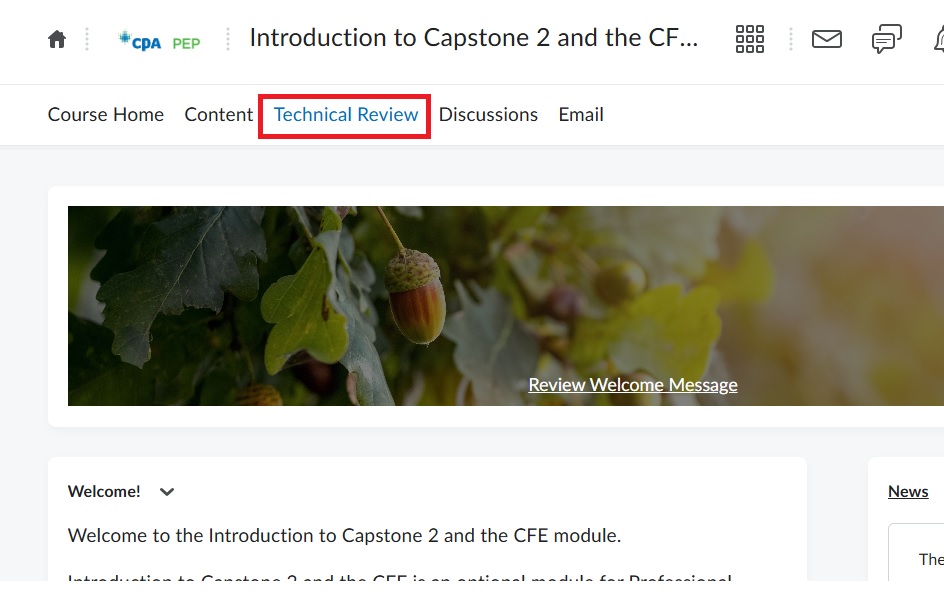
1. Click on Technical Review

Access D2L and click on Technical Review (top, next to Content).


2. Click on EBooks on the left hand side

Click on Ebooks which will open all the volumes and chapters. 


4. You cannot download or print

The new platform does not allow printing, which is a major disadvantage as most students prefer to work with printed material.


FAQ

Q1. I’m re-writing CFE and not taking Capstone 2. Do I have access to it?

Yes, all candidates in the CPA program have access to eBooks. Use the steps above to download it.

Q2. I’m challenging CFE as an international accountant (MOU). Do I have access to it?

Yes, once you register to write the CFE, you’ll get access to it. Follow the steps above to download eBooks.

Q3. Are eBooks, Handbook and Knotia the same thing?

No, they are different. eBook is a learning resource to help candidates prepare for the CPA exams. Handbook contains IFRS and ASPE standards. Knotia is the platform that has the Handbook and other standards, such as Income Tax Act.

Previously, eBook was on Knotia. It’s no longer there, it’s been moved to D2L.

Q4. How does the eBook change the exam?

CPA Canada exams are based on the exam blueprint and Competency Map, not the eBook. This means the eBook has no impact on your exam, it’s just a textbook to help you learn. CFE is based on the Competency Map, which had minor changes in 2022.

Extra Resources

Extra resources to help you pass for CPA Canada exams are available in my CPA coaching platform.

CFE Day 2: 10 Tips to Stay Focused for 5 Hours of CPA Exam

Both writing and preparing for Day 2 of the CFE can be an overwhelming and exhausting task given the 5-hour exam time. Since it’s longer than the other CFE Days, most students find it hard to maintain focus and stamina throughout. These tips will help improve your concentration and help produce better results in your Day 2 cases.

You can read about the basics of CFE Day 2 here.

1. Stay fueled.

Keep your body fueled to keep your mind energized. Eat well prior to exam and keep snacks available throughout to stay nourished. Avoid a heavy diet as this may make you sleepy (e.g. pizza, pasta, burgers, fries, sweets). Eat light, healthy breakfast before going to the exam center. Take snacks that are convenient to eat, healthy, and let you type your case at the same time (e.g. granola bars, berries, carrots, nuts).

Staying hydrated will also have a positive impact on concentration. Be sure to drink throughout the study/exam time by having a water bottle readily available to you. (Note: CFE exam regulations say that metal or non-transparent containers are disallowed. Drinks must be in their original container or in a clear container, with no label. Also, cans/juice boxes should be unopened before entering the exam room and cardboard sleeves from coffee cups should be removed.)

2. Walk around.

Exercise and taking breaks to walk around will keep your blood flowing to the brain, which can help you stay alert and energized. It’s a good idea to have a quick exercise before your exam to get energized. I suggest going for a quick bathroom break during the exam (every hour or every 2 hours) to help you get distracted and re-focus.

3. Prepare your workspace.

Get your workspace ready for everything you will need over the course of the 5 hours. This includes having plenty of writing materials (i.e. pencils, highlighters, erasers), snacks, and water. This helps to avoid having to leave your desk during the study period. Leaving your space may take you out of the concentration from the case or technical on hand. You will also want to eliminate any distractions, such as phones, and study in a quieter place (eg office, den) to replicate exam conditions.

4. Get plenty of sleep.

Your memory and attentiveness when studying is greatly impacted by a healthy sleep pattern. Develop a consistent sleep schedule by getting the recommended 7 to 8 hours of sleep during your study period to avoid any disruptions in your performance. To further improve the quality of your sleep, implement these additional tips:

  • Limit exposure to screens and electronic devices before bed
  • Avoid caffeine and other stimulants before bed
  • Go to bed at the same time each day
  • Make your sleep environment comfortable and conducive to sleep (e.g. cool temperature, quiet, dark)
  • Get regular exercise, but avoid strenuous activity close to bedtime
  • Manage stress through relaxation techniques, such as deep breathing or meditation

5. Stretch and breathe.

During the 5-hour study period, it’s possible to get up and move around, but during the actual exam, it will be a little harder. You can leave your desk to go to the washroom but you can’t take a stroll around the exam room.

Stretching at your desk is a better alternative to get your blood moving and leave your muscles feeling less tense and stiff. Sitting for long durations, your posture may be impacted negatively which could increase back pain and distractions. Performing neck rotations, shoulder stretches, and arm stretches will help reduce discomfort.

Especially in times of more stress, taking deep breaths at your desk will help create more mental clarity, help calm anxious thoughts, and boost energy. As simple as inhaling and exhaling for 10 seconds can reground you.

6. Be consistent.

Consistency and repetition are key for building strong study habits. To train yourself to sit down and focus for 5 hours, you want to be consistent in the time of day you are doing this. Given that the exam will be held in the morning, I recommend to replicate the exam setting and practice your case writing at the same time in the mornings.

The consistency is also key in other study areas, such as having a set method of debriefing, your diet, and study routine.

Many candidates that fail CFE tell me that they didn’t actually practice Day 2 cases in 5-hours. “When I get to the exam, I’ll be able to write in 5 hours.” This is rarely true. Don’t make this mistake, the actual exam shouldn’t be your first time writing a Day 2 case in 5-hour time limit.

7. Focus on yourself.

During the exam, you will be surrounded by other writers reading, typing, and snacking. It’s important to remain focused on your own computer and time limits, and be uninfluenced by those around you so you do not waste valuable time.

Some candidates use ear plugs so they are unaffected by any surrounding noises in the exam room and you can too (note: ear plugs are given in exam centers and you can bring your own).

8. Goals and rewards.

As you prepare for the exam, reward yourself after reaching milestones. Go out to your favorite restaurant at the end of a study week, or it can be something smaller such as watching a desired film as a break. It’s important to celebrate and allow yourself to be proud of the progress you’re making. This will help reduce the resentment or lack of motivation towards the new study habits and help you stay motivated.

9. Dress comfortable.

You will be sitting in the same spot for an extended period, so ensure you’re feeling your most comfortable in what you’re wearing to avoid any unnecessary distractions. Keep it simple and prepare for cooler temperatures in exam halls. CFE exam center doesn’t have a dress code. Here are suggestions:

Comfortable clothes for women:

  • Leggings or yoga pants
  • Comfortable jeans (not too tight or too loose)
  • Sweatpants or joggers
  • Loose-fitting t-shirts or sweatshirts
  • Hoody or light jacket
  • Flats or sneakers

Comfortable clothes for men:

  • Comfortable jeans or khakis
  • Loose-fitting t-shirts or sweatshirts
  • Hoody or light jacket
  • Sneakers or loafers

If you’re planning to go back to the office after the exam, put your office clothes in your bag and change after the exam. 

10. Positive mindset.

Part of getting through the 5-hour stretch is not getting bogged down and de-motivated by any technicals you don’t understand. Worrying about these items will cause you to lose focus from the items you do know well, and the stress may cause you to lose track of your timing.

Remain grounded that you have studied and prepared well. Handle each AO one at a time and focus on what you know. Keep focused on the goal of passing and believing you can do it!

Extra resources

Implementing these tips will take time, so try implementing them into your daily routine leading up to the exam. You can get extra CFE practice cases and exam resources here.


CFE Day 2: Proven Study Tips to Help You Pass the Exam

Day 2 of the CPA Canada’s CFE is the one most candidates find daunting due to its length and depth requirements. This study guide will break down the CFE Day 2 exam into key components to help you successfully study and pass Day 2.

You can read about the basics of CFE Day 2 here.

1. Effective case reading.

As you are reading the Day 2 case, you want to keep track of company and background information. This will help provide context as you write your response. This includes timeline (eg. year-end, key events, current date, etc.), users (eg, owners, investors, bank, etc.), industry the company operates, business information (eg financial reporting framework), requireds, and any other key information.

The case may not specifically outline the financial reporting framework at the start. Make note if the company is operating privately or publicly, as this will hint whether the case is ASPE or IFRS.

If you’re using a paper outline, be sure to decipher between the required and the background information by use of margin notes or different highlights. There is a lot of information on Day 2, and it’s critical to understand what is relevant to your plan and what is not.

Be sure to read the “Common” section and only your role. Don’t get caught up in information irrelevant to your analysis. For example, the Common section may give information about the external environment, such as competition, government increasing taxes, rising demand, changing consumer preferences, etc. This is given for PM role writers for their SWOT. If you’re writing other roles, this is not for you.

2. Planning the case.

Whether you prefer to plan on paper or computer, planning is critical to ensure you stay within the allotted time and can complete all AOs. For more resources on electronic vs paper outline, check out this article.

As you read your case, you should be noting down the requireds. You can also make note of any relevant pages or appendices as part of your plan. Your goal in planning is not to decide how you will answer the issue, but instead to determine what the issue is and what format you will answer.

For each AO, you want to allocate a specific amount of time to complete it. This will be unique to you depending on your strengths and typing speed. I suggest for reading and planning to take 1 hour in Day 2. You may choose to allocate 15-20 minutes for each of common issues and 20-25 minutes to each of your role AOs. When setting the amount of time, be sure to consider the time it takes for excel quants and summarizing in memo.

3. Sticking to your time.

It’s important to stick to your time for each AO. Going overtime on one AO will result in reducing valuable time in a different AO and could even result in your not completing each.

Keep an eye on the time as you write and as you start wrapping up your AO when you have 1-2 minutes left. Note that the conclusion is often required for a C and should be included for each AO.

Remember that your analysis doesn’t have to be perfect to achieve a C, it only needs to be reasonable. Don’t overspend your time on an AO by trying to include all facts or quantitative components into your calculation.

Day 2 is a 5-hour exam. Practice each case within this 5-hour limit so you can realistically see how you would perform under exam conditions.

4. Applying the structure.

For each AO, your best chance of obtaining a C is to follow the CPA Way method of response. This includes the following format:

  • Issue – Discuss the issue briefly using case facts. For example: “Company A received $50K for inventory they will ship in May. They have recorded this as revenue. The issue is whether this is the correct treatment.”
  • Standard – More related to FR issues, Assurance or Tax. Discuss the appropriate standards that need to be considered based on the issue.
  • Analysis – Integrate case facts to explain and assess whether the appropriate standards are being met. On Day 2, this step is critical for achieving depth. Make sure you explain how and why certain components are not met. Note that each criteria should have its own analysis.
  • Measurement – Any associated calculations should be summarized.
  • Recommendation – Was the initial treatment correct? If not, what adjustment needs to be made? What is the course of action you are recommending based on your analysis?
  • Impact – Keep in mind any additional factors that may be indicated such as covenants, company goals, or profitability. Note that writing the impact statement is not needed for C. It’s optional to write it.

If you receive an AO that you’re not sure how to answer, use the above framework to help guide your response.

5. Remembering technicals.

Going into the CPA Canada Handbook during the exam will take valuable time. There are many routine AOs that come up frequently throughout your studies and Capstone 2, such as revenue recognition. I recommend that you learn and memorize the criteria for these AOs, so you can spend more time analyzing the standards.

Note that the criteria can be written in your own words, they don’t need to be copied directly from the Handbook. Creating your own study templates can help prepare for this.

Familiarize yourself with the Handbook, however, in the case that you receive a less common, non-routine AOs that you may need to look up. Familiarize means understanding the structure, not memorizing the entire handbook. For example, IFRS 15 has 5 steps, Appendix A, and Appendix B. Step 2 and Step 4 are the most important.

6. Practicing cases.

Practice is the best way to learn time management, technicals, understand which AOs require further study, and the format CPA is looking for. Capstone 2 will provide practice cases, but I recommend that you write additional cases to get exposure to more AOs and technicals.

Try to write some past year CFEs for more technicals. Only few FR and CAS standards have changed in these past exams. The biggest changes were in FR’s revenue recognition and lease standards. In Audit, biggest changes were in special reports.  Although it’s important to write many practice cases, be sure to only write cases you can debrief effectively.

You can find extra CFE Day 2 and Day 3 cases here.

7. Debriefing cases.

Debriefing is key to success on Day 2. The process of debriefing is your main study method, as you learn and understand how to write responses, what criteria to use, and how to integrate case facts.

It’s important to rewrite your response, review technical notes and the handbook to guide your understanding, and create your own case templates.

It’s recommended to mark your own cases even if they are being professionally marked. This will get you more familiar with critically assessing your work and the feedback guide. It will also give you an idea of how you performed while you wait some time for your marked case.

8. Using an AO tracker.

Tracking your AO grades for each competency in Day 2 will help you to map out which AOs are your strengths, and which ones need more review. It also shows your progress over the study period and can be a confidence booster heading into the CFE!

Capstone 2 provides an AO tracker and I have one in my CFE program as well.

Extra resources

Overall, read the case effectively so that you can plan and stick to your time for each AO, follow the CPA Way approach when assessing each AO and be sure to integrate case facts and implications.

Be sure to practice and debrief each case so you can track your progress by each competency. These steps will allow you to build a strong foundation for approach Day 2 of the CFE.

You can get extra Day 2 practice cases and exam resources here.


What Happens if You Fail Core 1 of CPA Canada 3 Times?

CPA Canada allows candidates to attempt the Core 1 three times. At each unsuccessful attempt, candidates can ask for re-marking. After 3 unsuccessful attempts and unsuccessful remarkings, candidates will automatically be de-registered from the CPA PEP program. If you’re in this situation, here are some options to consider.

1. Re-register to get 4th attempt.

Officially, you have 3 attempts at Core 1. However, it’s possible to write it for the 4th time.

When you fail Core 1 three times, you will be automatically de-registered from the CPA Canada PEP program. You can re-register and get the 4th attempt by explaining to CPA Canada that you had a situation that was extraordinary, outside of your control, that caused you to fail one or more of prior attempts.

I have consulted many candidates and successfully got them the 4th attempt. 

Update 2025: Due to popular demand, I now offer a dedicated mini-course to help you prepare a strong 4th attempt case and timeline extension requests. Click on the image below to learn more:

2. Wait until 2027

As you may know, PEP and CFE are being changed from 2027. The new CPA certification program will not have Core 1/2, electives, MCQs, nor CFE. It will not focus on technicals, but rather on case writing and decision making. At the time of writing this article, we don’t have official details on the new program structure, however you can choose to wait until 2027 and register into the new program.

3. Take the U.S. CPA.

To take the US CPA exams, you don’t have to be a US citizen or go to the US. You can apply online and study from Canada. US CPA costs less than the Canadian CPA and there are only MCQs and short-form answers in the exam. I wrote a detailed post comparing both designations here.

4. Get ACCA

Another solid option is pursuing the ACCA designation. The ACCA, or Association of Chartered Certified Accountants, is globally recognized and well-respected in regions like the UK, Asia, and Europe. It’s also gaining strong recognition in Canada. Canadians can register for the program from within the country, complete the coursework online, and write the exams at approved local exam centres.

5. Pursue the CFA designation.

Holding the CFA (Chartered Financial Analyst) title can be beneficial for advancement in Financial Planning and Analysis (FP&A) roles. CFA is a strong alternative, especially if you’re focused on financial modeling, forecasting, budgeting, or investment analysis.

6. Pursue Masters in Accounting degree.

Masters in Accounting (MAcc) program is fast and instructor-lead, which appeals to many students. The major downside of MAcc is that schools require full-time studies, so you will need to quit your work to complete it. You can read more about MAcc program here

7. Become a Registered Professional Accountant (RPA)

The Registered Professional Accountant (RPA) designation is another good option to consider. RPA is a recognized accounting designation in Canada and it allows members to perform a range of accounting services, including tax preparation and compilations (CSRS 4200). The RPA  has existed since 1938, but few have heard of it due to its lower profile compared to the CPA. RPA designation is a great alternative to the CPA designation because it allows you to open a tax preparation service and complete income taxes and perform compilation engagements. To become an RPA, you have to pass a few exams and obtain 2 years of accounting experience. Since 2020, the RPA designation has been getting traction as an alternative to the CPA designation due to its practical focus and growing recognition among employers in Canada.

8. Focus on your career.

Having CPA or other certifications is not the only way to succeed in finance and accounting roles. Instead, gaining extensive work experience and developing strong networking skills can also make you a valuable asset to employers. Additionally, building a strong personal brand by networking, attending career events and staying up-to-date with the latest technologies can give you an edge in the hiring process, even over candidates with CPA titles.

Conclusion

It’s important to evaluate your professional goals. If your primary motivation for pursuing a CPA certification is career growth and high earning potential, it may be worth exploring other career paths or trying to get the 4th attempt. Consider enrolling in my new 4th Attempt & CPA Extensions course to learn more.


How to Become Canadian CPA For International Accountants

Transitioning from international accounting bodies to the Canadian CPA designation can be an overwhelming process due to complex eligibility requirements. This post will provide guidance on how to apply for CPA Canada designation as an internationally trained accountant. 

Generally, to become a Canadian CPA, you need to meet the entrance, education, examination and experience requirements. For international accountants coming to Canada, there are some exceptions to this process, based on mutual recognition agreements (MRA) and Memoranda of Understanding (MOU) between CPA Canada and the international CA bodies.

Table of contents

  • General mailbox
  • India and Pakistan
  • U.S.
  • Mexico
  • New Zealand and Australia
  • Ireland
  • Hong Kong
  • England and Wales
  • Scotland
  • South Africa
  • Zimbabwe

General mailbox

Before we get started, here is the email address to get in touch with CPA Canada directly if you would like to reach them: internationalinquiries@cpacanada.ca

Indian & Pakistan ICAI to Canadian CPA

Education: Members of the Institute of Chartered Accountants of India (ICAI) and Institute of Chartered Accountants of Pakistan (ICAP) that wish to obtain their Canadian CPA designation are exempted from all CPA PEP modules. While completion of Capstone 1 and Capstone 2 is not mandatory, they are encouraged for successful completion of the Common Final Exam (CFE), which is required. For details on whether Capstone 1 or 2 is worth it, please see this post. For comparison of ICAI exam and Canadian CFE exam, please see this post.

Experience: Members are required to have more than 5 years of post-qualification experience and no recognized university degree are exempt from assessment. Additionally, having more than 2 years of experience and a recognized degree are also exempt.

This requires you to have been a member of the ICAI or ICAP at the time experience took place. If members have less than the required experience, they will be subject to a review of their practical experience both pre and post qualification. 

Registration process: If you are a member with more than five years of post-qualification experience, no WES report is required. Instead, have the following documentation available:

  • Letter of Good Standing
  • Practical experience form
  • Detailed resume
  • Proof of legal name

If you are a member with between two to five years of post-qualification experience with a Bachelors degree from University, the following documents are required:

  • Letter of Good Standing from ICAI
  • WES Report through ICAP (International Credential Advantage Package)
  • Detailed resume
  • Practical experience form
  • Proof of legal name

If you are a member with less than two years of post-qualification experience, or between two to five years of experience but no Bachelors degree, you will need a detailed experience assessment by CPA. In this case there will likely be no MOU benefit on experience exemption.

A Letter of Good Standing to CPA Ontario specifically can be obtained in two ways:

  • Email: Send request to ITAregistration@cpaontario.ca
  • Hand delivery: Can deliver to CPA Ontario at 130 King Street West, Suite 3400, PO Box 358, Toronto ON M5X 1E1 if the Letter is original and valid (not older than six months).

Detailed Experience AssessmentCandidates will be required to provide paperwork for competencies achieved under all former or current employers, using a separate form for each employer. CPAO will then determine if you have 30 months of relevant experience.

CPA review of the experience assessment can take between three to several months. If your experience is rejected or you require more experience, this does not stop you from taking the CFE.

Membership vs License: If you are granted membership, you are given the CPA designation. If you desire to practice public accounting (sign financial statements, etc.) you will also need to obtain a public accounting license. A public accounting license can be applied for after admission to membership for the Canadian CPA.

Under the MOU pathway, students ae required to complete Assurance and Taxation modules and final exams prior to writing the CFE. Additionally, depth in Financial Reporting and Assurance is required on the CFE. Alternatively, to completing the modules, you can complete an approved course in Canadian business law and the Post Designation Public Accounting (PDPA) module and examination.

Canadian Residency: To pursue a Canadian CPA, citizenship or residency in Canada is not a prerequisite. To attend Capstone 1 and 2 workshops however, you must be legally entitled to be employed and study in Canada.

U.S. CPA to Canadian CPA

Context: The reciprocal agreement between Canadian CPA and U.S. International Qualifications Appraisal Board (IQAB), representing the National Association of State Boards of Accountancy (NASBA) and the American Institute of Certified Public Accountants (AICPA) came into effect on January 1, 2018. This gives the right for members to use the CPA designation, be registered, audit and other services or licensure.

Quick summary: You can convert your U.S. CPA to Canadian CPA if you graduated from a US university, passed the uniform CPA exam, have 30 months of work experience, and completed your CPE requirements.  If you are a Canadian who got the U.S. CPA and want to transfer it to Canadian CPA, you can’t do that, unless you actually worked in the U.S. for at least year. Comparison of U.S. CPA and Canadian CPA is available here.

(Note to Canadian students: If you failed CFE 3 times, you can consider getting the U.S CPA and use it to advance your career in Canada. It’ll be difficult to “convert” your U.S. CPA to Canadian CPA, but you can keep it as is and show on your resume that you completed the U.S. CPA.)

Education/Experience: Required to meet the following:

  • Equivalent of at least 150 semester hours in post-secondary education including a baccalaureate or higher degree conferred by a college or university acceptable to a State Board
  • Passed the Uniform CPA Exam
  • Have 30 months of relevant practical experience
    • 2 years of relevant post- qualification experience is considered met
    • Less than 2 years, you must complete International Practical Experience Verification and Employer Details form
  • In compliance with Continuing Professional Education (CPE) requirements of your State Board

If you wrote any are of the U.S. CPA exam as resident of Canada or after becoming one, you must additionally meet one of the below:

  • Have a university degree
  • Have at least one year in the USA of full-time practical experience

Registration process: Members must complete the following:

  1. International Candidate Application Form
  2. Certification of Membership with US State Board form
  3. Provide confirmation that you are a CPA in good standing by the Home Institute
  4. Proof of legal name (government-issued documentation)
  5. Detailed resume listing all relevant work experience
  6. Pay CPA fees
  7. Complete CPA Reciprocity Professional Development course (CPARPD) within two years of official membership admission date. The course will include 20 hours of online study in Canadian tax, law and ethics.
  8. CPA Reciprocity Education and Examination (CPARE) program. If members pass within two years of obtaining their provincial membership, they will not be required to also complete CPARPD as noted above.

Other information: Provincial regulations take priority over national practical experience. To receive a license to practice public accounting, the following criteria must be met:

  • Minimum 1,250 chargeable hours in assurance
  • Minimum 625 hours in audit of historical information

The required audit experience must occur within 5 years of provincial CPA application. Experience obtained in the USA may count towards hour requirement.

Next steps: Complete the process here.

Mexico IMCP to Canadian CPA

Context: The reciprocal agreement between Canadian CPA and the Instituto Mexicano de Contadores Públicos (IMCP) and Comité Mexicano para la Práctica Internacional de la Contaduría (COMPIC) came into effect on January 1, 2018. This gives the right for members to use the CPA designation, be registered, audit and other services or licensure.

Quick summary: See “U.S. CPA to Canadian CPA” above, the requirements are virtually the same.

Education/Experience: Required to meet the following:

  • Have obtained at least a baccalaureate or higher degree
  • Passed the Examen Uniforme de Certificacion de la Contaduria Publica (EUC)
  • Have a public accounting licence (Cédula Profesional) issued by the Dirección General de Profesiones/ Secretaría de Educación Pública
  • Have 30 months of relevant practical experience
    • 2 years of relevant post- qualification experience is considered met
  • In compliance with Continuing Professional Education (CPE) requirements

If you wrote the EUC as resident of Canada or after becoming one, you must additionally meet one of the below:

  • Have a university degree
  • Have at least one year in the Mexico of full-time practical experience

Registration process: Members must complete the following:

  1. International Candidate Application Form
  2. Certification of Membership with GAA Board form
  3. Provide confirmation that you are a CPA in good standing by IMCP
  4. Proof of legal name (government-issued documentation)
  5. Detailed resume listing all relevant work experience
  6. Pay CPA fees
  7. Complete CPA Reciprocity Professional Development course (CPARPD) within two years of official membership admission date. The course will include 20 hours of online study in Canadian tax, law and ethics.
  8. CPA Reciprocity Education and Examination (CPARE) program. If members pass within two years of obtaining their provincial membership, they will not be required to also complete CPARPD as noted above.

Other information: Provincial regulations take priority over national practical experience. To receive a license to practice public accounting, the following criteria must be met:

  • Minimum 1,250 chargeable hours in assurance
  • Minimum 625 hours in audit of historical information

The required audit experience must occur within 5 years of provincial CPA application. Experience obtained in Mexico may count towards hour requirement.

Next steps: Complete the process here.

Australia & New Zealand CA (CA ANZ) to Canadian CPA

Context: The reciprocal agreement between Canadian CPA and Chartered Accountants Australia and New Zealand (CA ANZ) came into effect on January 1, 2018, and gives the right for members to use the CPA designation, be registered, audit and other services or licensure.

Quick summary: You can convert your CA ANZ to Canadian CPA if you currently hold the CA ANZ designation. You’ll need to follow the steps noted below.

Education/Experience: Members must either have completed the CA ANZ education/training, or have completed a pathway under approved credit.

Registration process: Members must complete the following:

  1. International Candidate Application Form
  2. Certification of Membership with GAA Board form
  3. Provide CA ANZ confirmation that you are a CA in good standing
  4. Proof of legal name (government-issued documentation)
  5. Detailed resume listing all relevant work experience
  6. Pay CPA fees
  7. Complete CPA Reciprocity Professional Development course (CPARPD) within two years of official membership admission date. The course will include 20 hours of online study in Canadian tax, law and ethics.
  8. CPA Reciprocity Education and Examination (CPARE) program. If members pass within two years of obtaining their provincial membership, they will not be required to also complete CPARPD as noted above.

Other information: Provincial regulations take priority over national practical experience. To receive a license to practice public accounting, the following criteria must be met:

  • Minimum 1,250 chargeable hours in assurance
  • Minimum 625 hours in audit of historical information

The required audit experience must occur within 5 years of provincial CPA application. Experience obtained in Australia and/or New Zealand may count towards hour requirement.

Next steps: Complete the process here.

Ireland CA to Canadian CPA

Context: The reciprocal agreement between Canadian CPA and Chartered Accountants Ireland (CA Ireland) came into effect on January 1, 2018 and gives the right for members to use the CPA designation, be registered, audit and other services or licensure.

Quick summary: You can convert your Ireland CA to Canadian CPA if you currently hold the Ireland CA designation. You’ll need to follow the steps noted below.

Education/Experience: Members must either have completed the Ireland CA education/training, or have completed a pathway under approved credit.

Registration process: Members must complete the following:

  1. International Candidate Application Form
  2. Certification of Membership with GAA Board form
  3. Provide CA Ireland confirmation that you are a CA in good standing
  4. Proof of legal name (government-issued documentation)
  5. Detailed resume listing all relevant work experience
  6. Pay CPA fees
  7. Complete CPA Reciprocity Professional Development course (CPARPD) within two years of official membership admission date. The course will include 20 hours of online study in Canadian tax, law and ethics.
  8. CPA Reciprocity Education and Examination (CPARE) program. If members pass within two years of obtaining their provincial membership, they will not be required to also complete CPARPD as noted above.

Other information: Provincial regulations take priority over national practical experience. To receive a license to practice public accounting, the following criteria must be met:

  • Minimum 1,250 chargeable hours in assurance
  • Minimum 625 hours in audit of historical information

The required audit experience must occur within 5 years of provincial CPA application. Experience obtained in Ireland may count towards hour requirement.

Next steps: Complete the process here.

Hong Kong HKICPA to Canadian CPA

Context: The reciprocal agreement between Canadian CPA and Hong Kong Institute of Certified Public Accountants (HKICPA) came into effect on June 1, 2018 and gives the right for members to use the CPA designation, be registered, audit and other services or licensure.

Quick summary: You can convert your Hong Kong HKICPA to Canadian CPA if you currently hold the Hong Kong HKICPA designation. You’ll need to follow the steps noted below.

Education/Experience: Members must either have completed the HKICPA education/training, or have completed a pathway under approved credit.

Registration process: Members must complete the following:

  1. MRA/RMA International Applicant Form (send to provincial CPA body)
  2. Certification of Membership with GAA Board form
  3. Provide HKICPA confirmation that you are a CA in good standing
  4. Proof of legal name (government-issued documentation)
  5. Detailed resume listing all relevant work experience
  6. Pay CPA fees
  7. Complete CPA Reciprocity Professional Development course (CPARPD) within two years of official membership admission date. The course will include 20 hours of online study in Canadian tax, law and ethics.
  8. CPA Reciprocity Education and Examination (CPARE) program. If members pass within two years of obtaining their provincial membership, they will not be required to also complete CPARPD as noted above.

Other information: Provincial regulations take priority over national practical experience. To receive a license to practice public accounting, the following criteria must be met:

  • Minimum 1,250 chargeable hours in assurance
  • Minimum 625 hours in audit of historical information

The required audit experience must occur within 5 years of provincial CPA application. Experience obtained in Hong Kong may count towards hour requirement.

Next steps: Complete the process here.

England & Wales ICAEW to Canadian CPA

Context: The reciprocal agreement between Canadian CPA and Institute of Chartered Accountants in England and Wales (ICAEW) came into effect on November 1, 2018 and gives the right for members to use the CPA designation, be registered, audit and other services or licensure.

Quick summary: You can convert your England / Wales ICAEW to Canadian CPA if you currently hold the England & Wales ICAEW designation. You’ll need to follow the steps noted below.

Education/Experience: Members must either have completed the ICAEW education/training, or have completed a pathway under approved credit.

Registration process: Members must complete the following:

  1. MRA/RMA International Applicant Form (send to provincial CPA body)
  2. Certification of Membership with GAA Board form
  3. Provide ICAEW confirmation that you are a CA in good standing
  4. Proof of legal name (government-issued documentation)
  5. Detailed resume listing all relevant work experience
  6. Pay CPA fees
  7. Complete CPA Reciprocity Professional Development course (CPARPD) within two years of official membership admission date. The course will include 20 hours of online study in Canadian tax, law and ethics.
  8. CPA Reciprocity Education and Examination (CPARE) program. If members pass within two years of obtaining their provincial membership, they will not be required to also complete CPARPD as noted above.

Other information: Provincial regulations take priority over national practical experience. To receive a license to practice public accounting, the following criteria must be met:

  • Minimum 1,250 chargeable hours in assurance
  • Minimum 625 hours in audit of historical information

The required audit experience must occur within 5 years of provincial CPA application. Experience obtained in United Kingdom may count towards hour requirement.

Next steps: Complete the process here.

Scotland ICAS to Canadian CPA

Context: The reciprocal agreement between Canadian CPA and Institute of Chartered Accountants of Scotland (ICAS) came into effect on January 1, 2018 and gives the right for members to use the CPA designation, be registered, audit and other services or licensure.

Quick summary: You can convert your Scotland ICAS to Canadian CPA if you currently hold the Scotland ICAS designation. You’ll need to follow the steps noted below.

Education/Experience: Members must either have completed the ICAS education/training, or have completed a pathway under approved credit.

Registration process: Members must complete the following:

  1. International Candidate Application Form
  2. Certification of Membership with GAA Board form
  3. Provide ICAS confirmation that you are a CA in good standing
  4. Proof of legal name (government-issued documentation)
  5. Detailed resume listing all relevant work experience
  6. Pay CPA fees
  7. Complete CPA Reciprocity Professional Development course (CPARPD) within two years of official membership admission date. The course will include 20 hours of online study in Canadian tax, law and ethics.
  8. CPA Reciprocity Education and Examination (CPARE) program. If members pass within two years of obtaining their provincial membership, they will not be required to also complete CPARPD as noted above.

Other information: Provincial regulations take priority over national practical experience. To receive a license to practice public accounting, the following criteria must be met:

  • Minimum 1,250 chargeable hours in assurance
  • Minimum 625 hours in audit of historical information

The required audit experience must occur within 5 years of provincial CPA application. Experience obtained in Scotland may count towards hour requirement.

Next steps: Complete the process here.

South Africa SAICA to Canadian CPA

Context: The reciprocal agreement between Canadian CPA and South African Institute of Chartered Accountants (SAICA) came into effect on January 1, 2018 and gives the right for members to use the CPA designation, be registered, audit and other services or licensure.

Quick summary: You can convert your South Africa SAICA to Canadian CPA if you currently hold the SAICA designation. You’ll need to follow the steps noted below.

Education/Experience: Members must either have completed the SAICA education/training, or have completed a pathway under approved credit.

Registration process: Members must complete the following:

  1. International Candidate Application Form
  2. Certification of Membership with GAA Board form
  3. Provide SAICA confirmation that you are a CA in good standing
  4. Proof of legal name (government-issued documentation)
  5. Detailed resume listing all relevant work experience
  6. Pay CPA fees
  7. Complete CPA Reciprocity Professional Development course (CPARPD) within two years of official membership admission date. The course will include 20 hours of online study in Canadian tax, law and ethics.
  8. CPA Reciprocity Education and Examination (CPARE) program. If members pass within two years of obtaining their provincial membership, they will not be required to also complete CPARPD as noted above.

Other information: Provincial regulations take priority over national practical experience. To receive a license to practice public accounting, the following criteria must be met:

  • Minimum 1,250 chargeable hours in assurance
  • Minimum 625 hours in audit of historical information

The required audit experience must occur within 5 years of provincial CPA application. Experience obtained in South Africa may count towards hour requirement.

Next steps: Complete the process here.

Zimbabwe ICAZ to Canadian CPA

Context: The reciprocal agreement between Canadian CPA and Institute of Chartered Accountants of Zimbabwe (ICAZ) came into effect on April 1, 2019 and gives the right for members to use the CPA designation, be registered, audit and other services or licensure.

Quick summary: You can convert your Zimbabwe ICAZ to Canadian CPA if you currently hold the ICAZ designation. You’ll need to follow the steps noted below.

Education/Experience: Members must either have completed the ICAZ education/training, or have completed a pathway under approved credit.

Registration process: Members must complete the following:

  1. International Candidate Application Form
  2. Certification of Membership with GAA Board form
  3. Provide ICAZ confirmation that you are a CA in good standing
  4. Proof of legal name (government-issued documentation)
  5. Detailed resume listing all relevant work experience
  6. Pay CPA fees
  7. Complete CPA Reciprocity Professional Development course (CPARPD) within two years of official membership admission date. The course will include 20 hours of online study in Canadian tax, law and ethics.
  8. CPA Reciprocity Education and Examination (CPARE) program. If members pass within two years of obtaining their provincial membership, they will not be required to also complete CPARPD as noted above.

Other information: Provincial regulations take priority over national practical experience. To receive a license to practice public accounting, the following criteria must be met:

  • Minimum 1,250 chargeable hours in assurance
  • Minimum 625 hours in audit of historical information

The required audit experience must occur within 5 years of provincial CPA application. Experience obtained in Zimbabwe may count towards hour requirement.

Next steps: Complete the process here.

Extra resources for passing Canadian CPA Exams

Coaching and study materials are available at the CFE Review.

 

How to Download CPA Canada PEP Program Syllabus

The CPA Canada Profession Education Program (PEP) Syllabus (formerly Survival Guides) provide a summary of readings every week for each PEP module. The readings are divided into 8 study units which match the 8-week duration of the program. I suggest to download and print them before your module starts, so that you complete your readings in advance.

Here are the steps to download the PEP syllabus for any module:

Step 1: Access CRC (Certification Resource Centre)

Go to CPA Canada’s certification resource center: https://www.cpacanada.ca/en/become-a-cpa/certification-resource-centre/resources-for-cpa-pep

Step 2: Scroll down to the middle of the page

Scroll down to the middle of the page, you’ll see the 6 PEP modules, each with the corresponding syllabus:

  • Core 1
  • Core 2
  • Assurance
  • Finance
  • PM
  • Taxation

Click to download for each module.

Step 3: Review

Once you download the PDF, you’ll see the readings organized per study unit. Begin your studies by going through the chapters, starting from Unit 1.

Chapters in the syllabus refer to the CPA Canada Learning Library (eBooks), which replaced the Knotia eBook in 2023. Each chapter includes a snapshot, written instruction, examples, e-lessons on select technical topics, summary problems, and practice multiple-choice questions (MCQs).

Should You Explain the CFE Day 1 Situational Analysis Framework?

CPA Canada’s Day 1 CFE requires a very different approach than the remaining two CFE days. The layout of the case is based on your Capstone 1 case, with little technical criteria application. Before even starting to assess the strategic issues, you’ll be required to complete a Situational Analysis Framework. Most candidates find difficulty in understanding the detail requirements to completing the situational analysis. Below is a guide to clarify the depth needed when starting your CFE Day 1 response.

Day 1 Situational Analysis

A major component to being successful on Day 1 is to have a strong situational analysis in your answer. You should follow the below format:

  • Identify the mission, vision, values of the company and if / how each has changed from Capstone 1.
  • Identify any key success factors (KSFs) of the company (typically 4 to 5 is a good rule of thumb).
  • Outline any goals and objectives of the company or key stakeholders.
  • Identify any constraints (i.e. financial or other) and covenants the company has to comply with.
  • Complete an updated external / internal analysis in the form of SWOT analysis (making sure analysis is well-rounded).
  • Perform a financial assessment, including a ratio analysis, call out of key financial items and/or YoY financial (i.e. profitability) changes.

You don’t need to memorize the entire Capstone 1 case, but the above key areas need to be studied well because you’ll use them in your CFE Day 1 answer.

Details of Situational Analysis 

The situational analysis itself should not take more than 20 minutes, but you do want to complete it fully, because you’ll be linking each of your issues back to the points from it throughout the remainder of the exam.

Most components of the situational analysis can be written in point form. For example, listing the KSF as they appear in the case with no additional explanation is fine. You will notice in the below example of KSF, the points are not explained further with implications, but just written in point form.

As you link back (“integrate”) to some of these points in your strategic issues, they would then be elaborated further with implications.

What about SWOT?

I don’t recommend to explain SWOT. You should write short point form case facts, such as the example below.


Conclusion

Situational analysis is required to successfully pass Day 1 of the CFE, however you don’t need to explain it. 

Summary:

Day 1 SA section How to format
Mission, vision, values Point form, don’t explain
KSFs Point form, don’t explain
Goals/objectives Point form, don’t explain
Constraints Point form, don’t explain
SWOT Point form, don’t explain
Financial assessment Explain briefly

Extra Resources

Day 1 pass rates have been falling in the recent CFEs. To help students succeed, I provide templates, extra practice cases, exercises, and live classes to master and pass CFE Day 1. Extra resources are available at the CFE Review.


Why You Should Take PM Elective After Core 2

After you’ve passed both Core 1 and Core 2, you’ll be at the point in your CPA Canada PEP journey where you have to choose your first elective. There is no right or wrong on which elective to take, but depending on your strengths, weaknesses, desired CFE role and career goals, you may choose one elective over the other.

While there are several pros and cons to each elective, having just finished Core 2, there are several advantages to taking Performance Management (PM) as your next elective. Here’s why.

PM has similar quants (calculations)

Both Core 2 and PM blueprints focus on Management Accounting (MA), Strategy and Finance competencies. You can smoothly transition your knowledge and studying techniques from Core 2 to PM because most of PM’s technicals are like Core 2 and still fresh in your mind. 

For example, here’s the exam blueprint for Core 2:

And here’s the exam blueprint for PM:

You can see that MA, Strategy and Finance are the key competencies in both.  (Note: You’ll notice above that Finance is not tested in PM’s objective-format portion (MCQs). This is misleading because MCQs are a small part of the PM exam while Finance plays a big role of the case portion. Ensure you study Finance well for the PM exam.)

Some common calculations (quants) that show up both in Core 2 and PM include:

  • CVP (break-even, contribution margin analysis)
  • Product mix
  • Variance analysis (price, usage/quantity)
  • Sensitivity analysis
  • Sourcing (inhouse, outsource)
  • Constraints (scarce resources)
  • Relevant costing
  • Activity-based costing (ABC)
  • Transfer pricing (TP)
  • NPV and IRR
  • Ratio analysis (profitability, liquidity, efficiency)
  • Valuations
  • Payback period

The biggest challenge with quants for candidates is being able to identify the most appropriate analysis (“quants tool”) to choose when answering an AO. This is a skill you would have developed and strengthened during Core 2 that will help contribute to success in PM with a similar calculation structure. The MA Templates toolkit will help you refine and master these calculations.

PM has similar qual

PM and Core 2 have qualitative components on similar subject matters. While studying for Core 2, you would not have studied much Financial Reporting (FR), Assurance, or Tax criteria. Because of this, taking a different elective would require you to shift focus and start reviewing these topics again from scratch. For example, if you take PM and Assurance as your electives, and you take Assurance right after Core 2, it will require you to re-learn Assurance and FR concepts you’ve already forgotten from Core 1.

Additionally, Strategy & Governance takes up about 50% of the PM exam. Using the approach of being concise and specific with explanations, as well as integrating case facts, is critical for getting C in PM qual. This is a skill you would be familiar with from Core 2. You would also be in the habit of being “big-picture” focused, in aligning the company’s values or user objectives to the overall strategy. This is again prevalent in PM.

Managing your time effectively while balancing various quant and qual analyses was critical during your Core 2 studying. This time management skill is equally important during the PM exam and will make transitioning your study techniques efficient and give you an advantage when prepping as well.

Some common qualitative assessments (qual) between Core 2 and PM include:

  • Integrating mission, vision and values (M/V/V)
  • Addressing strategic decision making (use of SWOT, Porter’s 5 Forces, PESTEL)
  • Responsibility centers (evaluating performance)
  • Decision pros vs cons (outsourcing, capital investment, acquisition)
  • Pricing strategies (demand-based, cost-based, bundling)
  • Risk management (using RIM format)
  • Governance structure (i.e. evaluating current board of director’s structure and provide recommendations using WIR format)
  • Balanced Scorecards (BSC)
  • KPIs
  • Financing Sources

The Core 2 and PM supplemental practice cases and MCQs provide good practice on above concepts.

Extra resources

Because much of what you have learned and successfully demonstrated in Core 2 is necessary for being successful in PM, I suggest to take PM directly after Core 2 for a seamless study transition. From both qualitative and quantitative perspective, there are several overlaps in subject material that you will already have an understanding on that could be tested again in PM. This will also advance your knowledge in key concepts that will be tested during Capstone 1 and Day 1 of the CFE. Extra study resources can be found in the Core 2 and PM Review courses.


How to Solve DAIS in CPA Canada PEP and CFE Exams

With increased focus on big data and emerging technologies in our day-to-day lives and professional careers, CPA Canada has placed more focus on Information Technology (IT) and Data Analytics and Information Systems (DAIS) in the competency map. Despite previous inclusion on the CPA Competency Map, many resources like the E-Book, weekly practice cases (PCs) and integrated problems (IPs) have not explained DAIS sufficiently. This article will help you prepare for DAIS issues in the CPA Canada PEP and CFE exams.

Data Analytics and Information Systems (DAIS) topics

Though DAIS affects all competencies, Management Accounting (MA) is the most commonly tested area. The following sections have been added to the MA competency regarding information and decision making:

  • Data visualization of financial and nonfinancial data
  • Dashboards, graphs, tables report design
  • Communication of information for quality decision making
  • Framing information recognizing uncertainty
  • What is the value of information in the decision-making process?
  • Transformation of data to decision relevant information
  • Creation of intellectual property and knowledge development
  • Ethical use of information
  • Dimensions of information quality – relevance, ease of use, integrity, timeliness
  • Types of data and their attributes (nature, sources, format, timing, extent and level of aggregation)
  • Professional skepticism regarding data
  • Information quality and the impact of processing models
  • Data cleansing
  • Data structure and standards
  • Data extraction and import
  • Data life cycle

I don’t suggest spending the time to study above concepts. They may come as MCQs in PEP exams, but you’ll be able to find the right answer through logical thinking. Instead, study data visualization, because this is the most commonly tested DAIS topic on the cases and CFE.

Data visualization (charts)

Using the CFE September 2021 Day 2 FFTY case and solution, let’s walk through an example of how data visualization (charts) DAIS can be tested on a case. I will walk through the first three charts. (Note: If you don’t know how to approach CFE level cases, follow the steps below as I break down the case and the solution).

Step 1: Required

On page 15 of the case, under the Excerpts from the management committee meeting appendix, it’s indicated that they would like you to analyze the data (charts and graphs) provided in Appendix VI and provide any recommendations for improving operating profits.

In the background information (page 3 and 9), we are told that FFTY is a grocery store chain specializing in locally-produced, farm fresh foods. FFTY produced three types of products:

  • 1) Freshly prepared hot and cold food
  • 2) Non-perishables (eg. canned and dry goods)
  • 3) Perishables (eg. fruit, vegetables, dairy and meat)

Step 2: Analysis

We see the charts in Appendix VI (page 18) and our task is to analyze the charts and provide a recommendation.

First set of charts are seasonal trends. We see that the perishable “Cost of goods sold” line is higher than the revenue line for the months of December to February. We also see that the COGS are not a straight-line.

To analyze the chart, we’ll follow the steps below:

  • (1) We write what’s the issue that the chart reveals (ie, perishable items are being sold at a loss during winter)
  • (2) We explain the results (ie, we assess why this may be occurring. For example, it may be harder to get organic perishable items during the winter months due to lack of access. We also state the impact. We discuss what the results mean for the company. For example, because the revenue is not enough to cover the costs, perishable items are generating a loss for FFTY during these months. It’s important to integrate case facts to achieve depth. On page 9 on the case, it says that “FFTY tries to keep prices for most items stable throughout the year”. This is contributing to the losses as the price remains constant during the periods when costs are higher.
  • (3) We provide a recommendation (the case says that “customers are willing to pay a premium for locally produced, whole foods” (Page 9), so customers are less price sensitive. We can suggest FFTY to increase the pricing of perishable items during the winter months.)

In summary, we’ll write in our analysis that perishable items are being sold at a loss, since COGS during winter months is higher than the revenue. This could be due to lack of access to organic perishable items and selling prices not being adjusted to cover the cost increase.

For non-perishables, we see that there’s decrease in non-perishable revenue during the summer months (July to September). Comparing with the earlier chart, we see increase in perishable revenue during the same time period.

We’ll write that there’s a decrease in non-perishable revenue during July to September months. This could be due to customers substituting non-perishable items with perishable ones during the summer.

The next seasonal trend is for freshly prepared hot and cold foods. We see that freshly prepared foods revenue is lower in the summer months.

We’ll write that freshly prepared foods revenue is lower in the summer months. This could be due to customers being away or having more time to cook their own food than purchase prepared food during those months. FFTY does not currently have seating areas for people to eat prepared foods, which could explain why the revenues are down.

Step 3: Assumptions

In addition to analyzing the charts, we’re also required to discuss data limitation and reliability of the charts. This is needed for C.

Always consider that you may not have access to the entire data set and must acknowledge that there can be gaps or unreliable information provided. To assess this, you will want to consider and discuss the following items:

  • When (i.e. year) the data was provided: Have there been significant changes since? In the case of FFTY, the data is from 2019 but the company saw growth and franchise expansion in 2020.
  • The source of the data: Who is providing the information? Do they have a bias? What systems is the data coming from?

Template for DAIS

Format your answer with IER + WIR.

  • IER means: Issue, Explanation (interpretation + implication + impact), Recommendation.
  • WIR means: Weakness, Implication, Recommendation.

You must write both (IER and WIR) to get a C.

In IER, we analyze the chart. We write what’s the issue based on the chart, explain (interpretation, implication, impact and relevance to the company), and give recommendation (specific, clear recommendation on what action to take).

In WIR, we discusses reliability of the charts. We discuss the weakness, implication, and recommendation.

Sample answer

Here’s a sample answer to the first three charts in this case:

Chart #1: Perishables:

  • Issue: Throughout the year, perishable are providing a reasonable gross margin. During the winter months (December to February), perishable items are being sold at a loss, since COGS during those months is higher than revenue.
  • Explanation: This could be due to lack of access to organic perishable items and selling prices not being adjusted to cover the cost increase.
  • Recommendation: Given that FFTY’s customers are willing to pay premium for locally sourced foods (ie, less price sensitive), FFTY should increase the pricing of perishable items during the winter months to cover the increase in costs.

Chart #2: Non-perishables:

  • Issue: There’s increase in perishable revenue during the summer months (July to September) and decrease in non-perishable revenue during the same period.
  • Explanation: FFTY tries to keep prices stable, the increase in perishable revenue is likely due to increased volume of sales. Given that customers are likely substituting non-perishable items with perishable ones during the summer, this appears reasonable.
  • Recommendation: FFTY could attempt to keep non-perishable revenue high during the summer months by offering a small discount on non-perishable items that pair well with perishable items.

Chart #3: Freshly prepared hot and cold foods

  • Issue: Freshly prepared foods revenue is lower in the summer months.
  • Explanation: This could be due to customers being away or having more time to cook their own food than purchase prepared food during those months. FFTY does not currently have seating areas for people to eat prepared foods, which could explain why the revenues are down.
  • Recommendation: Add seating areas which may help increase revenue during the summer months since there may be a group of customers who will purchase freshly prepared food to eat at FFTY.

Assumptions:

Below, I’ll discuss reliability and gaps in the information provided.

  • Weakness: Jim has used financial data only from 20X0, not 20X1.
  • Implication: There are some changes in 20X1, such as company growth and new franchisees, that could cause 20X0 not to be representative of 20X1 or of future years.
  • Recommendation: Use more recent data to get better analysis. 
  • Weakness: Jim used only two sources of data: the accounting system and the spoilage spreadsheet.
  • Implication: Data could be incomplete and not include all relevant information (eg popularity of certain brands or whether discounts are being used). This could result in poor decisions or inappropriate recommendations.
  • Recommendation: Seek additional sources of information (eg information in POS system should have useful data, such as which products are more popular and when products are being purchased). This would provide useful information for FFTY’s operational plans.
  • Weakness: Jim has used internal sources of information only.
  • Implication: Data could be incomplete, as external sources (eg industry statistics) are valuable in helping to interpret results.
  • Recommendation: Use industry statistics. They can be used to understand if FFTY is making good decisions (eg is FFTY’s strategy of keeping prices stable throughout the year different/same as its competitors).

(Note: For this AO, 3 IER and 3 WIR items were enough to get C. To be able to answer this AO, you needed to know the rest of the case and key case facts. Notice that I’m keeping the “issue” and “weakness” lines short; most of the marks are in the “explanation” and “recommendation”, you should focus on these. Though I wrote in bullet form, using two tables is better.)

Extra resources

CPA Canada will continue to test more DAIS in PEP and CFE exams, as the importance of analyzing data and innovating processes continues to emerge. To get extra resources on DAIS, check out my PEP and CFE courses.


Do You Need to Memorize Capstone 1 Case for CFE Day 1?

In preparing for Day 1 of the CPA Canada CFE, it’s important to understand that Day 1 is a continuation of the Capstone 1 case. Similar to Capstone 1, Day 1 will test your ability to problem solve, make decisions and communicate recommendations. Because Day 1 is so different from the other CFE days, candidates often wonder how much of the original Capstone 1 case to read and remember, what parts of Capstone 1 repeat in Day 1, and what parts can be ignored.

Capstone 1 vs. CFE Day 1

CFE Day 1 picks up where Capstone 1 left off. Day 1 is the same company as you had in Capstone 1, only several years in the future (for example, 5 years after Capstone 1). What this means is that you will be working with the same industry, same business and same key stakeholders. For this reason, I highly recommend that you study in-depth the Capstone 1 case to familiarize yourself with key concepts.

If you’re a PEP student taking Capstone 1, you will get the case and read it as part of the module. If you’re an internationally trained accountant, I don’t recommend taking Capstone 1, instead download the case from CPA Canada’s website and study it.

Day 1 differences

The Day 1 case will go over which strategic options from Capstone 1 the company decided to pursue, environmental changes, new options, new financing, a big picture issue and operating issues. For this reason, you do not need to memorize how the Capstone 1 strategic options were assessed and concluded as a group. What is important to keep in mind is that you will have to use a similar approach in assessing this new Day 1 case, which is following the CPA Way, including qualitative and quantitative assessments for each new option, and overall conclusion.

Capstone 1 concepts to memorize

While you will be primarily using new information for the Day 1 version , it’s important to study and remember key concepts from Capstone 1, as some will be applicable.

Below list provides key areas you should remember from your Capstone 1 case. The Capstone 1 case is extremely lengthy, therefore, I recommend to outline key pages for your reference.

  • Mission / Vision / Values – You will be required to compare the Capstone 1 M/V/V to that provided in the Day 1 and comment on any changes or additions.
  • Users / Key Stakeholders – Important to understand the needs of each.
  • Key Success Factors (KSF) – You will be required to list them in Day 1. There are usually no changes to KSF in Day 1, so you can list them as they were in Capstone 1.
  • Internal & External assessment (SWOT) – Remember some of them and list in Day 1. In Day 1, I suggest putting 80% of SWOT from the new Day 1 case and 20% from the original Cap 1.
  • Objectives / Goals / Targets – New goals will be stated but important to keep prior ones in mind.
  • Financing – Remember key ratios, bank covenants, and interest rates from Cap 1 so that you can compare with those in Day 1.
  • Constraints / Big picture – New constraints will be presented.

Additionally, you should make note of key industry and company information. For example, number of products sold, locations, branches, key competitors and so on.

You can download an example of my Capstone 1 summary here to understand how to best summarize the Capstone 1 case.

Conclusion

It’s very important to study the Capstone 1 case prior to Day 1 of the CFE. As part of my CFE exam preparation program, you can use my Cap 1 summary notes to study what’s relevant from Capstone 1. Reviewing these notes prior to Capstone 2 will also make it easier to tackle Capstone 2’s Day 1 practice cases.